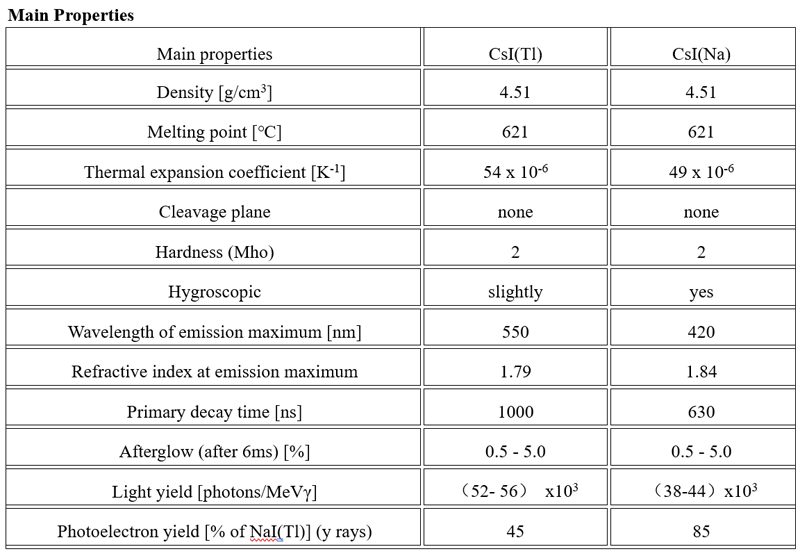
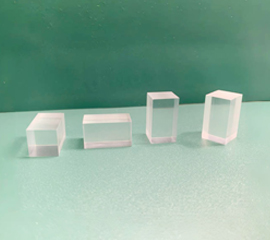
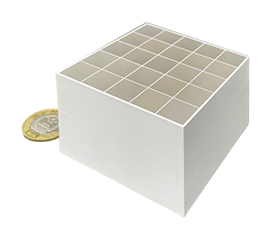
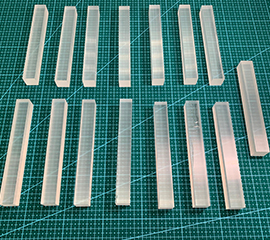
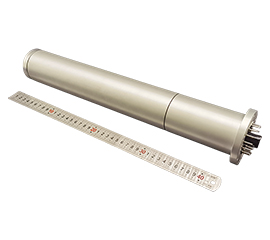
The light output of CsI(Tl) crystal is 45% of the NaI crystals, with a maximum emission peak at 550 nm, which matches well with silicon photodiodes, thereby greatly simplifying the readout system. Its decay time is related to the ionizing power of the incident particles, making it particularly suitable for detecting heavy charged particles in environments with strong γ-ray backgrounds. CsI(Tl) crystal is relatively soft and somewhat plastic, allowing it to be fabricated into various shapes and to withstand significant mechanical and thermal shocks. When used in air, it exhibits slight deliquescence compared to NaI crystal.
The CsI(Na) crystal exhibits scintillation efficiency comparable to NaI, with its emission spectrum peaking at 420 nm, making it more compatible with photomultiplier tubes (PMTs). It demonstrates superior temperature stability, rendering it particularly suitable for high-temperature environments and space science applications. However, its light output declines rapidly at low energies (20 keV), and it is more hygroscopic than CsI(Tl) crystal.